The Psychology of Clumsiness (Ages 2.5–13)
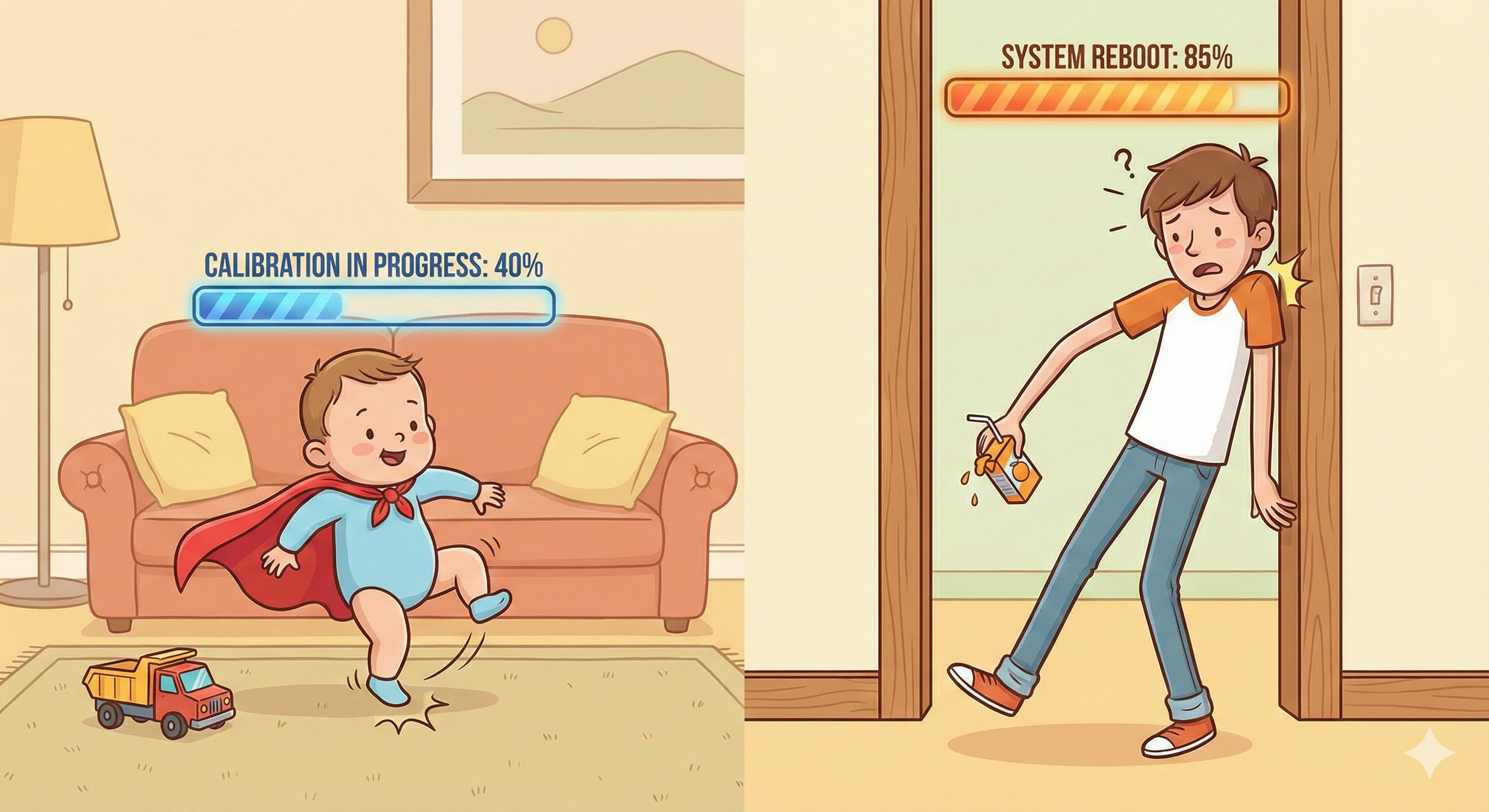
1. The "Top-Heavy" Toddler (Ages 2.5 – 5)
The Era of Mechanical Failure
At this age, clumsiness is almost entirely biological.
The Physics: Toddlers have large heads relative to their bodies. This raises their center of gravity, making them physically unstable.
The Psychology (The "Spotlight" Problem): A young child’s brain has a limited "attentional spotlight." If they are looking at a dog across the street, their brain literally stops processing the existence of the toy truck at their feet. They don't trip because they can't walk; they trip because their brain deleted the floor to focus on the dog.
Proprioception: This is the body's ability to know where it is in space without looking. In young children, this "sixth sense" is still under construction. They literally don't know where their feet end.
2. The School-Age "Daydreamer" (Ages 6 – 10)
The Era of Distraction & Diagnosis
By age 7, basic motor skills (walking, running) should be automatic. If clumsiness persists here, it often shifts from a physical cause to a processing one.
Processing Speed: Some children physically move faster than they can process visual information. They are running a "Ferrari engine with bicycle brakes."
The Psychological Impact: This is the age where social comparison begins.
A 3-year-old trips and laughs.
A 7-year-old trips, looks around to see who saw, and feels shame.
Psychological Note: If a child realizes they are "the clumsy one," they may start avoiding sports or playground games to protect their ego, which ironically prevents them from practicing the skills they need to improve.
The "DCD" Check: If your child struggles with buttons, holding a pencil, and tripping (both fine and gross motor skills), psychologists look for Developmental Coordination Disorder (Dyspraxia). This affects about 5-6% of children and is a disconnect between the brain's plan ("pick up the cup") and the hand's execution.
3. The "Glitchy" Pre-Teen (Ages 11 – 13)
The Era of Rapid Reboot
Just as coordination stabilizes, puberty hits and ruins everything. This is arguably the most frustrating phase for the child.
The Growth Spurt Glitch: Bones often grow faster than muscles and nerves.
A 12-year-old might grow 4 inches in a year. The brain has an internal map of how long the legs are. Suddenly, the legs are longer than the map says, so the child trips over a step they successfully cleared a thousand times before. The brain hasn't downloaded the "software update" for the new hardware.
The "Imaginary Audience": In adolescent psychology, teens believe everyone is watching them (the Imaginary Audience phenomenon). A minor stumble feels like a public humiliation, leading to anxiety, which leads to stiff muscles... which leads to more clumsiness.
| Age Group | The Fix | Why it works |
| 2.5 – 5 | "Heavy Work" | Carrying heavy things (groceries, laundry baskets) forces the brain to pay attention to where the muscles are (Proprioception). |
| 6 – 10 | Martial Arts / Swimming | These are individual sports. They build coordination without the pressure of "letting down the team" if they drop a ball. |
| 11 – 13 | Logic & Patience | Explain the "growth spurt glitch" to them. Knowing their brain is just recalibrating reduces the shame of falling. |